In my decades of tailoring, I have crafted thousands of suits. Each one began the same way -with a conversation, a measuring tape, and a blank sheet of pattern paper. The process of creating a bespoke suit has remained fundamentally unchanged for generations, and for good reason: it works. Every step exists because it produces a result that no shortcut can replicate.
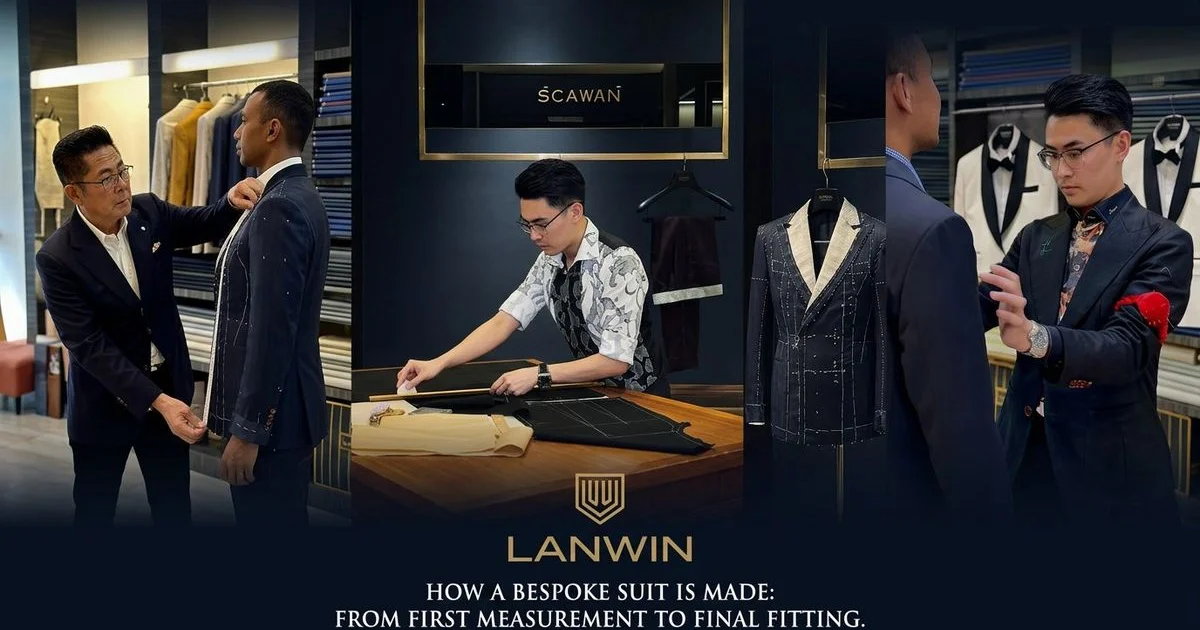
Allow me to walk you through the complete journey of a bespoke suit at LANWIN Premier, from the moment you step through our door to the day you collect a garment that fits you and only you.
Stage One: The Initial Consultation
Every bespoke suit begins with a conversation. This is not a sales pitch -it is a genuine dialogue between tailor and client. We need to understand not just your measurements, but your life. How do you spend your days? What occasions will this suit serve? Do you carry a phone in your breast pocket? Do you drive frequently? Do you gesture broadly when you speak, or keep your arms close?
These questions might seem unusual, but they directly inform how your suit is constructed. A gentleman who drives extensively needs slightly more room in the left shoulder. A frequent speaker benefits from a marginally higher armhole that allows arm movement without pulling the jacket body. A client who carries items in specific pockets may need reinforced internal construction in those areas.
During this consultation, we also discuss style preferences. Lapel width and shape. Button configuration -single-breasted, double-breasted, the number and placement of buttons. Pocket styles -jetted, flapped, patch, or a combination. Vent preference -single, double, or none. Trouser details -pleats, break, cuff width, waistband style.
At LANWIN Premier, we guide our clients through these decisions with care. We offer recommendations based on body type, lifestyle, and personal style, but the final choices always belong to the client. This is your suit, and every detail should reflect your preferences.
Stage Two: Measurements and Body Analysis
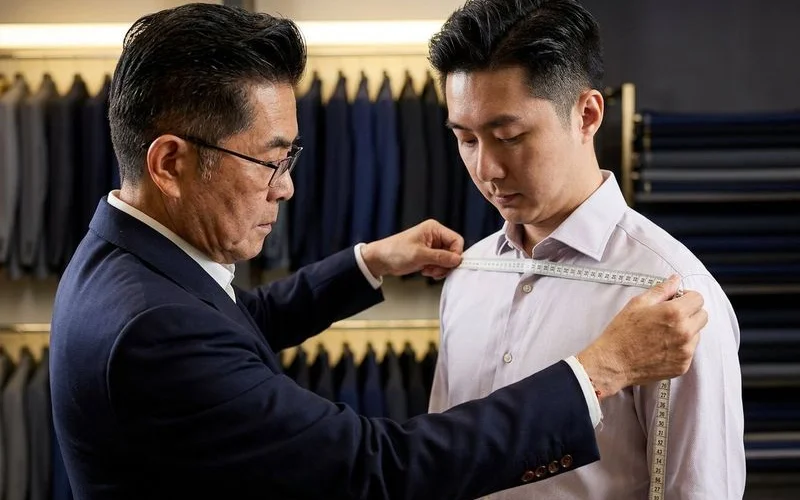
With design decisions established, we move to the measuring process. This is where bespoke tailoring truly diverges from every other method of suit production.
We take between thirty-five and forty individual measurements, far more than the twelve to fifteen typically used in made-to-measure services. But measurements alone tell only part of the story. Equally important is the body analysis -a detailed assessment of your posture, proportions, and physical characteristics.
Is one shoulder higher than the other? Most people have a dominant side that sits slightly lower. Does the client have a forward lean or an erect carriage? Are the hips wider or narrower than standard relative to the chest? Is there a prominent seat or a flat one? How do the arms hang -forward, straight, or slightly back?
These observations are recorded in a detailed set of notes that accompany your measurements. Together, they form a complete physical profile that enables us to create a pattern that accounts for your body’s unique geometry.
Stage Three: Fabric Selection
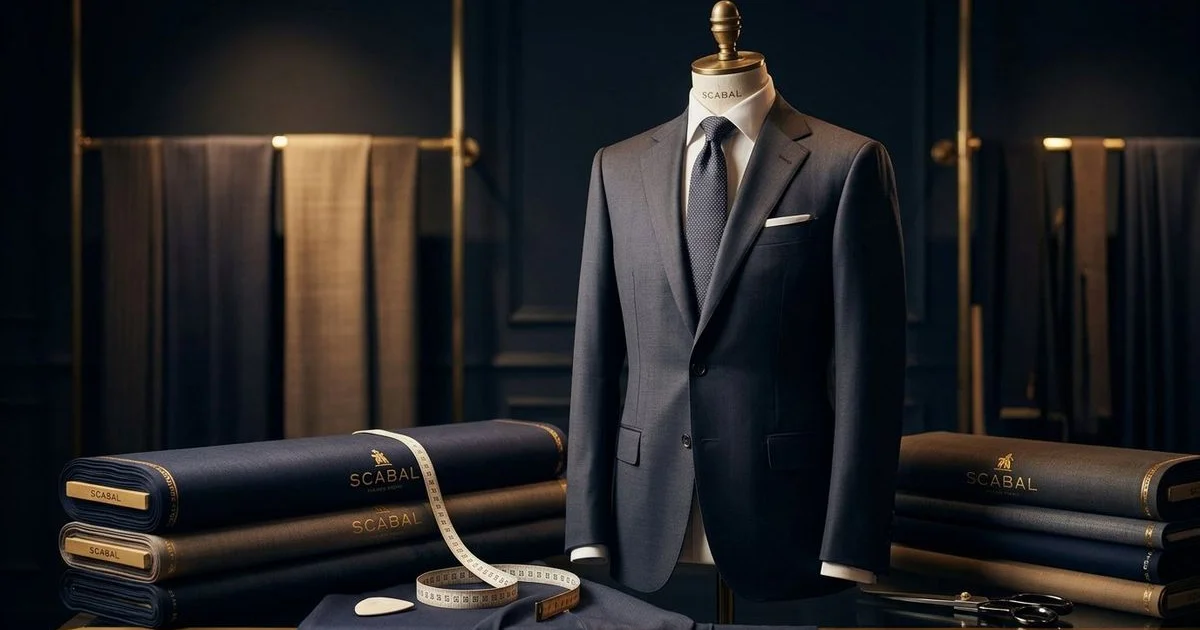
Choosing your cloth is one of the most enjoyable stages of the bespoke process. At LANWIN Premier, we maintain an extensive library of fabrics from the world’s finest mills -Loro Piana, Scabal, Holland & Sherry, Dormeuil, and many others.
For our clients in Malaysia, fabric selection requires particular consideration. Our tropical climate demands cloths that breathe well, resist creasing, and maintain their shape in humidity. We typically recommend fabrics in the 250 to 280 gram range -heavier than a summer suit in temperate climates, but light enough to remain comfortable in our heat.
Wool remains the gold standard for suiting, but within that category, the range is enormous. Super 110s offers durability and wrinkle resistance -ideal for daily wear. Super 130s to 150s provides a softer hand and more luxurious drape, though at the cost of some durability. For special occasions, we offer cloths up to Super 200s -extraordinarily fine and soft, though best reserved for garments that will see limited wear.
We also offer linen, linen-wool blends, cotton, and silk blends for specific applications. Each fabric behaves differently under the needle and on the body, and our experience with these materials in Malaysia’s climate allows us to advise clients with confidence.
Stage Four: Pattern Drafting
This is the stage that defines bespoke tailoring. Using your measurements, body analysis, and design specifications, we draft a completely original pattern on large sheets of brown paper.
Pattern drafting is both mathematics and art. The tailor must translate a three-dimensional body into a two-dimensional template, accounting for curves, angles, and the way fabric behaves when shaped and pressed. Every line on the pattern represents a decision -where a seam will fall, how much ease to allow for movement, how the garment will interact with the body in motion and at rest.
Your pattern is unique. It will be stored in our archive, labelled with your name, and retained for future commissions. When you return for your next suit, we begin with your existing pattern, making only minor adjustments for any changes in your body. This is why bespoke clients often find that their second and subsequent suits fit even better than their first -the pattern has been refined through experience.
Stage Five: Cutting
With the pattern complete, we lay it atop your chosen fabric and cut the pieces by hand. Cutting is a high-stakes operation -there is no margin for error when working with fabric that may cost several hundred ringgit per metre.
The cutter must consider not only the shape of each pattern piece but also the direction of the cloth’s weave, the alignment of any pattern or stripe, and the placement of pieces to minimise waste while ensuring that the finished garment presents a cohesive appearance.
Stripe and check matching is a particular point of pride at LANWIN Premier. We ensure that patterns align across seams -at the pockets, at the lapels, across the back seam, and down the sleeve. This level of attention requires additional fabric and considerably more time, but it is one of the hallmarks of truly fine tailoring.
Stage Six: The Canvas and Baste
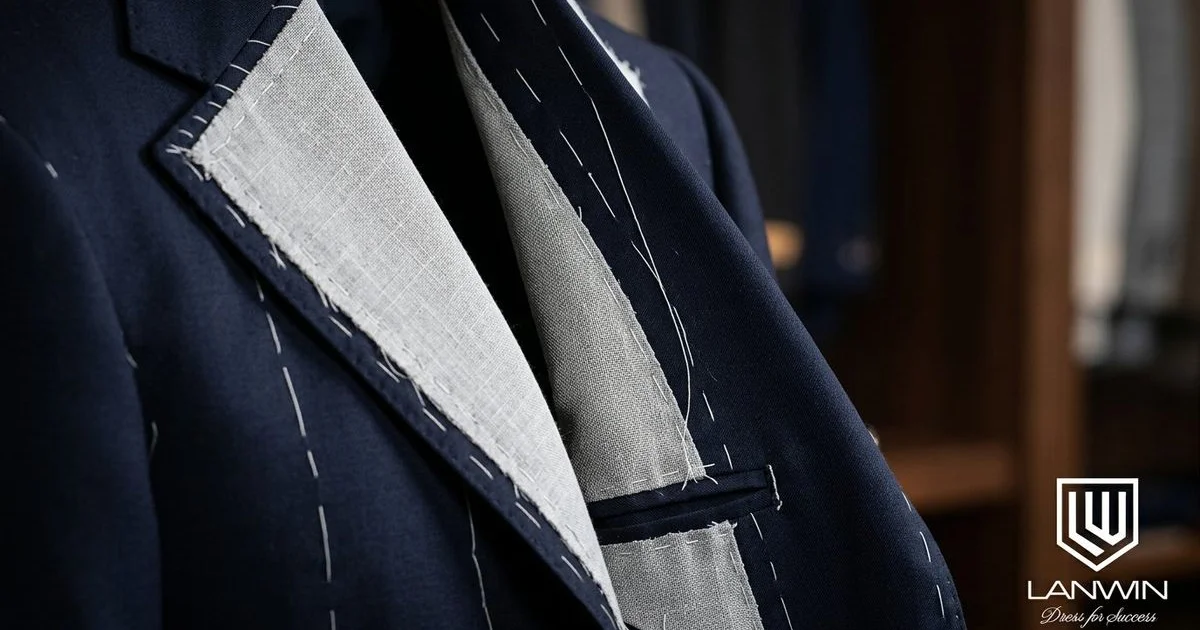
Before any permanent construction begins, we create the canvas -the internal skeleton of the jacket. Using horsehair cloth, cotton, and wool interlining, we build a structure that will give the jacket its shape, support, and drape.
The canvas is hand-padded using thousands of tiny stitches that gradually shape the horsehair into the desired chest profile. This pad-stitching is one of the most time-intensive processes in bespoke tailoring, requiring hours of skilled handwork. But it is also one of the most important -the quality of the pad-stitching directly determines how the finished lapels roll and how the chest moulds to the wearer’s body over time.
With the canvas prepared, we construct a baste -a rough version of the jacket, assembled with temporary stitching. The baste allows us to assess the fit on your actual body before any permanent work is done.
Stage Seven: The First Fitting (Baste Fitting)
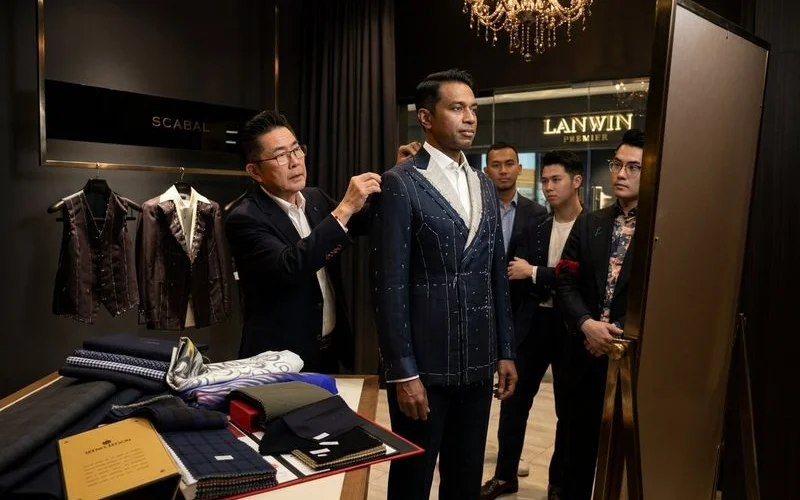
The baste fitting is perhaps the most critical appointment in the bespoke process. You will try on the roughly constructed jacket, and your tailor will assess every aspect of the fit.
We examine the jacket systematically: the shoulder line and width, the chest suppression, the waist shape, the skirt length and balance, the collar fit, the sleeve pitch and length, the lapel roll, and the overall drape. We use chalk to mark adjustments directly on the garment and pins to simulate alterations.
This is an interactive process. We ask you to move -to sit, to reach, to walk, to button and unbutton the jacket. A suit must not only fit when you stand still; it must accommodate the full range of your daily movements.
After the baste fitting, the jacket is disassembled and the pattern is adjusted based on our observations. This iterative refinement -fit, assess, adjust, refit -is what allows bespoke tailoring to achieve a level of precision that no other method can match.
Stage Eight: Construction
With the pattern refined and the baste approved, permanent construction begins. This is where the tailor’s skill truly comes to the fore.
The jacket is assembled piece by piece, with each seam carefully pressed and shaped as it is completed. The canvas is attached to the front panels. The collar is set by hand -a process that requires extraordinary precision, as even a millimetre of error will be visible in the finished garment. The sleeves are set, again by hand, with the fullness distributed evenly around the sleeve head.
The trouser construction proceeds in parallel. Pockets are constructed, the waistband is built, the fly is assembled, and the legs are shaped and pressed. Trouser construction is often underestimated, but a well-made pair of bespoke trousers -with their clean drape, comfortable rise, and precise break -is a revelation compared to off-the-rack alternatives.
Throughout construction, the garment is pressed repeatedly. Pressing is not merely removing wrinkles -it is shaping the fabric. A skilled presser can coax wool into curves and contours that would be impossible to achieve through cutting and sewing alone. The chest is pressed into a convex curve. The shoulder is shaped over a pressing ham. The trouser crease is set with precision.
Stage Nine: Subsequent Fittings
Depending on the complexity of the commission, one or two additional fittings may be required. These fittings assess the garment in its near-finished state, allowing for final adjustments before completion.
At this stage, the fit should be very close to final. We are looking for subtle refinements -a slight adjustment to sleeve length, a minor tweak to the waist suppression, a small correction to the trouser break. These final adjustments are what elevate a good fit to a perfect one.
Stage Ten: Finishing
The final stage of construction involves the details that distinguish fine tailoring: hand-sewn buttonholes, hand-attached buttons, hand-finished edges, and hand-slipped lining. These elements are not merely decorative -they are functional. Hand-sewn buttonholes are stronger and more flexible than machine-made ones. Hand-slipped lining allows the jacket to move naturally without pulling.
We also add any requested personal touches at this stage: monogramming on the interior, custom lining, personalised labels, or other bespoke details.
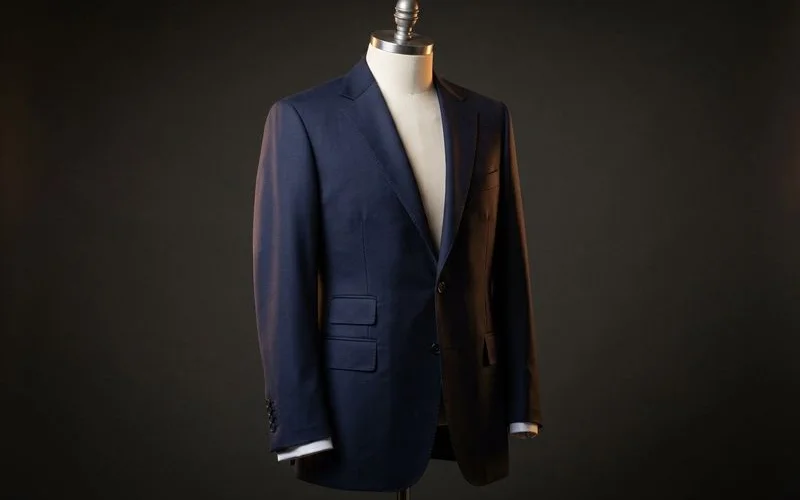
The finished suit is given a final pressing, inspected by the master tailor, and prepared for collection.
Stage Eleven: Final Fitting and Delivery
When you collect your suit, we conduct a final fitting to ensure everything meets our standards -and yours. We assess the fit one last time, check every detail, and make any last-minute adjustments on the spot.
We also provide guidance on care and maintenance: how to hang the suit, how often to clean it, how to deal with minor repairs, and how to store it during periods of non-use. A well-cared-for bespoke suit will serve you for many years, and proper maintenance is essential to realising that potential.
The Investment of Time
The complete bespoke process at LANWIN Premier typically requires six to ten weeks from initial consultation to final delivery. This timeline reflects not just the hours of skilled labour involved, but the necessity of allowing time between fittings for adjustments and reconstruction.
We understand that this pace can feel slow in our modern world of instant gratification. But we would gently suggest that the anticipation is part of the experience. The knowledge that skilled hands are crafting something uniquely yours, with care and precision, is itself a luxury -and one well worth savouring.
If you are ready to begin your bespoke journey, we welcome you to visit our atelier. Every great suit begins with a single conversation, and we look forward to having that conversation with you. Explore our bespoke suits to learn more about what LANWIN Premier can create for you.