You have likely noticed that the terminology around custom menswear has become increasingly blurred. When clients ask about Bespoke vs Made-to-Measure: What Is the Difference?, many executives and legal professionals assume any suit ordered to their measurements is created equally. We see this confusion daily in our fitting rooms.
This assumption leads to paying premium prices for garments that lack true foundational structure.
The actual difference between these two methods dictates how a jacket drapes over a dropped shoulder, how it breathes in the Malaysian heat, and whether it will last three years or three decades. We will clarify these exact distinctions for you.
The following data breaks down the construction methods and compares the genuine costs. You can then make a fully informed decision for your next wardrobe investment.
Defining Bespoke Tailoring
The word “bespoke” originates from Savile Row in London, where cloth reserved for a particular client had “been spoken for.” True traditional suit-making adheres to a set of principles that have remained largely unchanged for over two centuries. We uphold these exacting standards in our own practice.
The Savile Row Bespoke Association established strict guidelines requiring a minimum of fifty hours of hand labour to produce a standard two-piece suit. A genuine custom suit is created entirely from scratch for one individual client. There is no pre-existing pattern, no base template, and zero factory involvement.
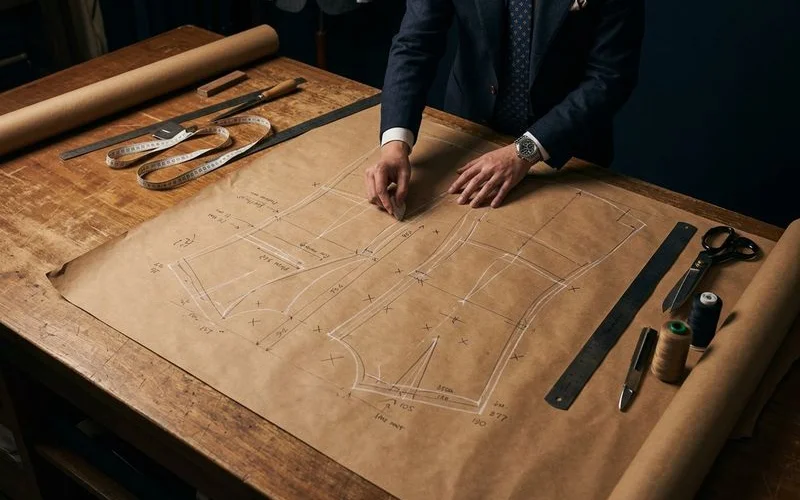
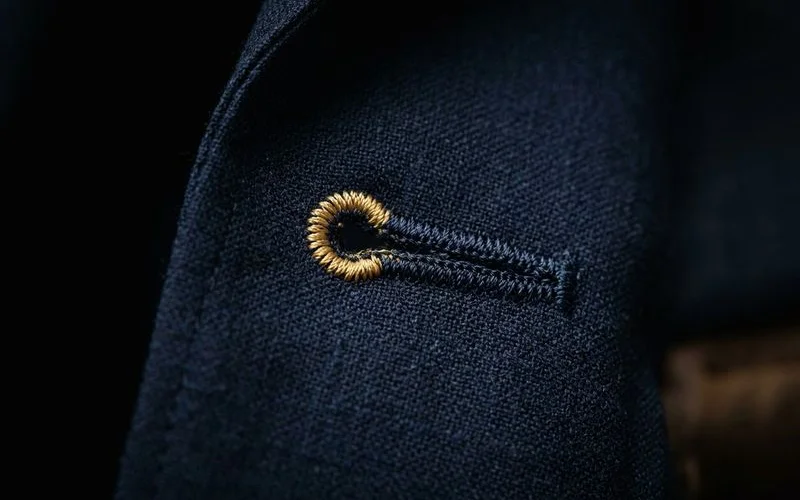
Every element of the garment is crafted by hand in the cutter’s workroom. This hands-on process extends from the initial paper pattern draft to the final hand-finished buttonhole.
The Bespoke Process
Creating a garment from scratch requires several highly specialised steps.
- Individual pattern creation: The cutter takes thirty to forty distinct measurements to draft a unique paper blueprint. This pattern accounts for physical characteristics like a forward head stance or a dropped shoulder caused by mild scoliosis.
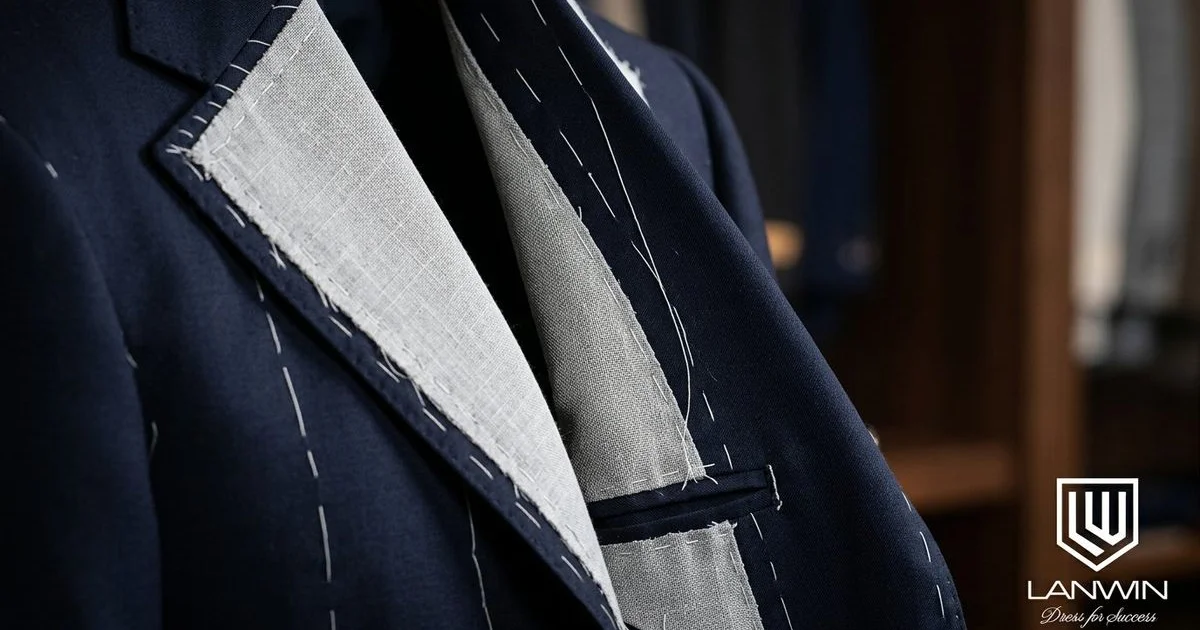
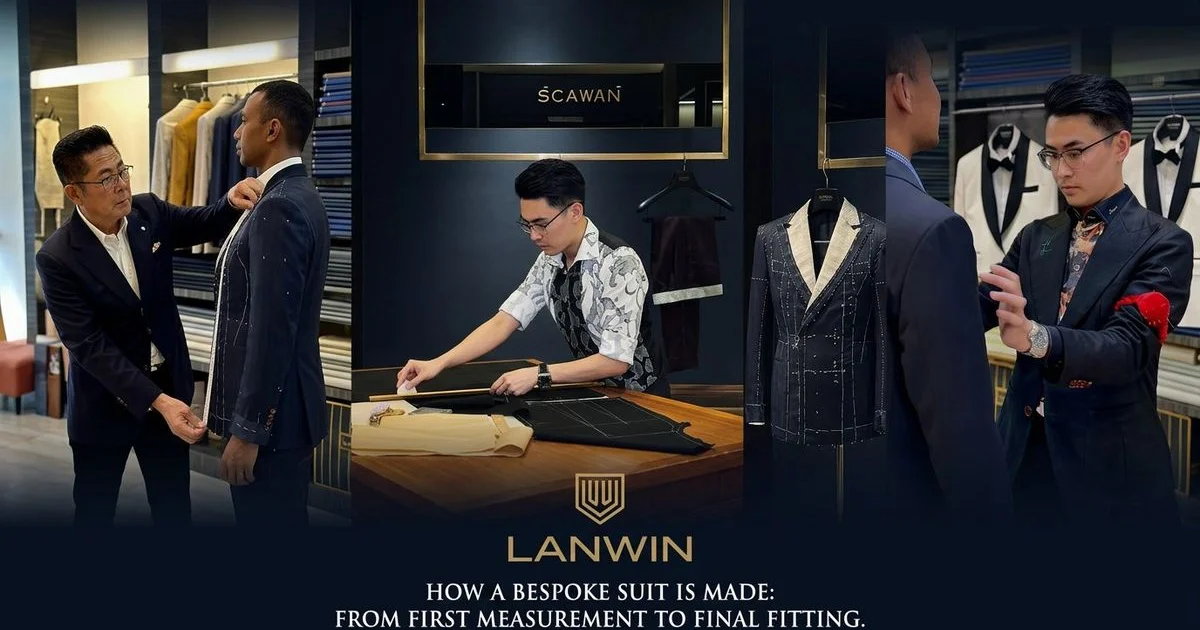
- Multiple fittings: A traditional suit requires a minimum of three fittings. The first is a basted fitting, where the tailor loosely holds the jacket together with white thread for structural assessment.
- Hand construction: The vast majority of the suit uses hand-stitching. The tailor hand-pads the canvas with horsehair and wool, allowing the jacket to mold to your chest.
- Complete customisation: Every design decision belongs to the client. You dictate the lapel width, button configuration, pocket placement, and interior details.
Defining Made-to-Measure
Made-to-measure (MTM) is a hybrid approach that sits between fully custom and off-the-rack clothing. It offers distinct personalisation options that easily surpass buying a suit off the shelf. We recognise that this method provides a valuable service for men requiring a faster turnaround.
This system operates strictly within the constraints of pre-existing block patterns and automated factory production. Most commercial brands utilise standard European or British size blocks as their starting point.
The Made-to-Measure Process
The MTM production cycle relies on efficiency and standardization.
- Modified base pattern: The process begins with a standard template corresponding to common body types. A salesperson takes your measurements and submits them to a factory for basic adjustments.
- Limited fittings: Most services involve a single fitting after the factory completes the garment. There is no basted fitting to correct major balance issues mid-production.
- Factory production: Assembly takes place on a factory floor using industrial sewing machines. Fused interlinings or machine-stitched half-canvas structures replace traditional hand-padding.
- Constrained customisation: Factories offer a specific menu of options. You pick from a set list of pocket styles, linings, and lapel shapes that the machines can accommodate.
Bespoke vs Made-to-Measure: What Is the Difference?
Pattern and Fit
This category represents the most significant distinction between the two methods.
A true custom pattern is a unique architectural blueprint existing solely for you. It captures your precise measurements, your natural carriage, and the subtle asymmetries defining your posture. Our master cutters at LANWIN Premier draft patterns that have never existed before.
“A custom pattern does not just record your size; it memorises your exact posture, acting as a permanent blueprint for future garments.”
An MTM pattern merely modifies an existing block. The underlying geometry of the base template remains permanent, regardless of how many adjustments the factory makes.
Important fit characteristics are inherited from that standard block. The pitch of the sleeve, the balance of the jacket, and the front-to-back length ratio cannot shift dramatically. Desk-bound professionals often develop a slightly rounded back, which causes an MTM collar to gap awkwardly.
The limitations of pattern modification become obvious for clients with uneven shoulders or specific postural habits.
Construction Quality
Traditional construction relies overwhelmingly on skilled handwork. The craftsman shapes the canvas by hand, rolls the lapels by hand, and sets the collar manually.
This manual labour produces a qualitatively superior result compared to machine stamping. Hand-padded lapels roll naturally over the chest. Hand-set sleeves hang cleanly without twisting.
You can verify this quality using the “pinch test.” Gently pinch the fabric just below the bottom buttonhole to feel the separate, floating layer of canvas between the outer shell and inner lining.
Key Construction Differences:
- Canvas: Full horsehair canvas versus glued interlinings.
- Stitching: Hand-sewn tension versus rigid machine seams.
- Climate Control: Breathable natural layers versus heat-trapping synthetic glues.
MTM construction varies depending on the specific provider. High-end MTM operations might utilise a half-canvas structure, but many budget options rely heavily on fused interlinings. Fused suits trap heat, making them significantly less breathable in Malaysia’s tropical climate.
Time and Process
Creating a fully custom suit is an immersive journey. The process typically takes six to ten weeks locally, or up to eighteen weeks from international tailoring houses.
“True refinement takes time. Each fitting strips away imperfections until the garment perfectly mirrors your physique.”
You will visit the shop multiple times during this period. Each fitting refines the garment until it achieves absolute perfection. We build a collaborative relationship with every client to ensure the final piece reflects their exact professional requirements.
An MTM suit is typically delivered in just two to four weeks. You visit once for measurements and fabric selection, returning only for collection. The process is highly efficient but lacks any iterative refinement.
Longevity and Alterations
A fully custom suit is constructed with generous seam allowances. A skilled cutter can adjust the garment significantly over time to accommodate weight fluctuations or changes in posture.
Properly maintained full-canvas suits boast a lifespan of fifteen to twenty years. The horsehair canvas acts like a skeleton, holding the shape firmly without degrading.
MTM suits possess highly limited alteration potential. Factory seam allowances are minimal. The fused glue inside machine-made jackets eventually breaks down, causing visible bubbling or “delamination” after just three to five years of regular dry cleaning.
The Price Question
Creating a garment from scratch requires a larger initial financial commitment. In Malaysia, market data from 2026 shows a decent MTM suit ranges between RM 1,000 and RM 2,000.
A traditional custom suit from an established house like LANWIN Premier begins at a higher price point, particularly when selecting premium English wools from mills like Holland & Sherry. We believe transparency is crucial when discussing these investments.
Consider what you actually receive for your money.
| Feature | Bespoke Tailoring | Made-to-Measure (MTM) |
|---|---|---|
| Pattern | Unique paper blueprint drafted from scratch | Pre-existing factory block pattern |
| Construction | Full floating canvas, hand-stitched | Often fused or half-canvas, machine-made |
| Lifespan | 15 to 20 years | 3 to 5 years before delamination |
| Fittings | 3+ fittings including a baste stage | 1 final fitting after completion |
For VVIPs and executives who wear suits regularly, the per-wear cost of a hand-crafted garment often drops below that of MTM options. The suit lasts decades longer and requires zero premature replacements.
Which Is Right for You?
We would never suggest that one single method suits every individual. Made-to-measure serves a clear purpose in the menswear market. It provides a solid balance of speed and value for many professionals.
Consider MTM if:
- You possess highly standard, symmetrical body proportions.
- You need a finished suit in under a month.
- You want a better fit than off-the-rack clothing on a strict budget.
- You are building a high-volume wardrobe rapidly.
Consider full custom if:
- You have natural asymmetries like one shoulder sitting lower than the other.
- You are preparing for your wedding day or a major corporate milestone.
- You want absolute creative control over every stitch.
- You view clothing as a long-term investment lasting over a decade.
Our team at LANWIN Premier welcomes clients at every stage of their sartorial journey.
The LANWIN Premier Perspective
Grand Master Desmond Loi established our family legacy in 1979. We have watched the rise of MTM services and automated measurement tools with great interest. Any development moving gentlemen away from ill-fitting, ready-to-wear clothing is a positive step.
Our third-generation Master Tailors know that true craftsmanship offers something impossible to automate. You receive a garment that is structurally and stylistically yours.
“A custom suit is not an adaptation of a factory template; it is a legacy piece created explicitly for you.”
It is a suit created from nothing, explicitly for you, by skilled hands practising a historic art form. If you have never experienced a proper basted fitting, we invite you to visit our atelier. Feel the weight of the raw cloth, and watch your unique paper pattern take physical shape.
When considering Bespoke vs Made-to-Measure: What Is the Difference?, the answer lies in the permanence of the final product. That specific moment of recognizing a perfect, personal fit is the genuine core of our profession. Book a private consultation with our team today to begin drafting your own legacy garment.